
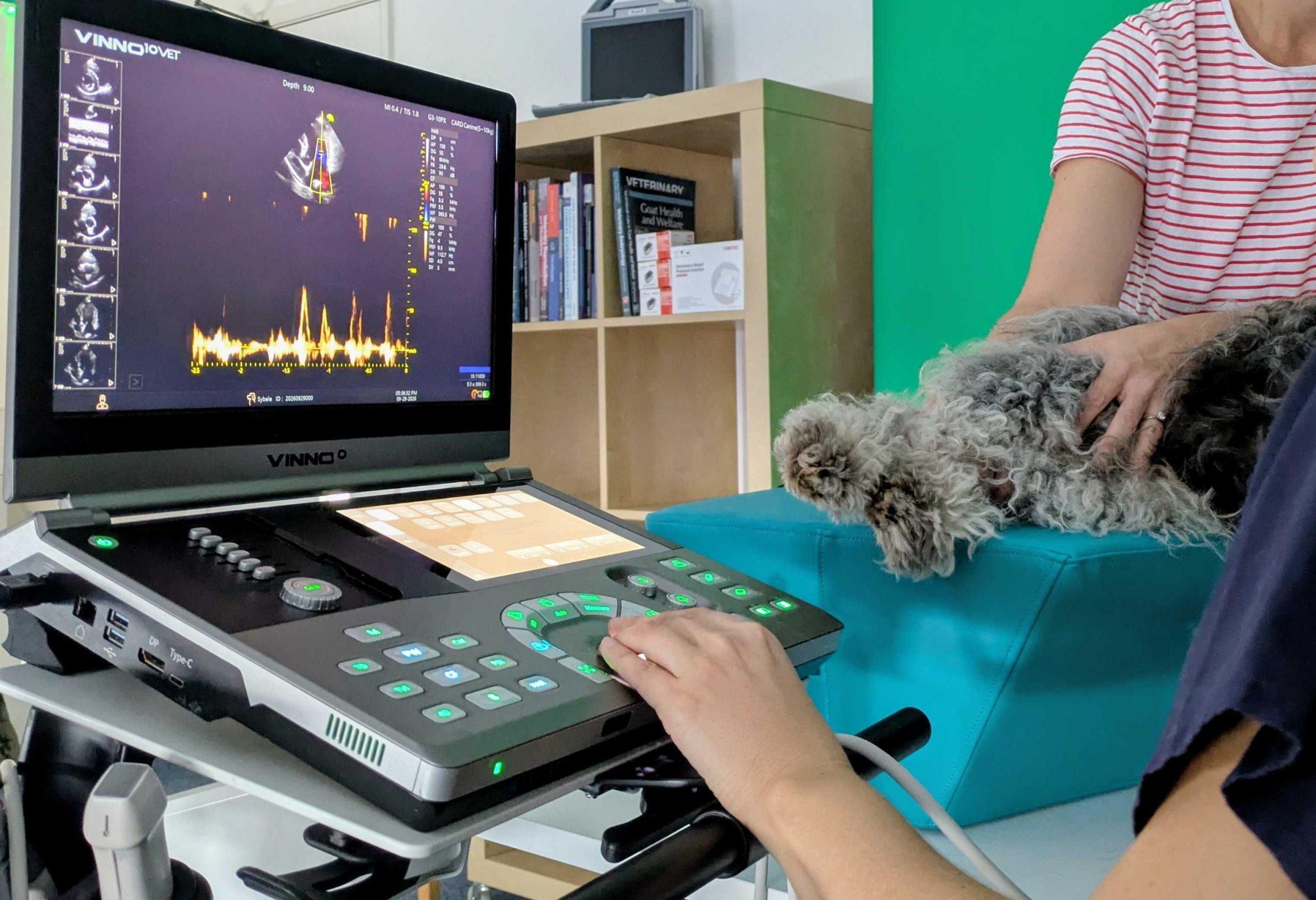
The AUA recently hosted an Echocardiography Day Course, led by echocardiographer and AUA founder Catherine Stowell. The premise of the day was to give a small group of veterinarians an opportunity to learn and refine their echocardiography skills while building the confidence to actually use them in a daily clinical setting.
There are many advantages to developing these skills; key among them is the opportunity to clock up practical experience in ultrasound generally, an invaluable tool to have in a variety of clinical scenarios. Veterinary training provides a broad foundation, but it is not always possible to give focused attention to scanning and individual specialisms, such as echocardiography. Proficiency in these areas therefore relies on the vet finding opportunities to grow their ultrasound skillset during their career, either through clinical experience or specialist courses such as those run by the AUA.
Our group ranged from four years to 29 years in practice, illustrating that there has always been, and remains, a need for further ultrasound training within the profession. It also confirms the reason for the perennial popularity of this course: professional development is a lifelong endeavour.
Much of initial veterinary ultrasound training is focused on theory, and while this is foundational to scanning, it is the subsequent practise undertaken that really hones these skills and turns them into an investigative tool that can be reached for in everyday practice. This was highlighted frequently in conversation with the four vets who attended the course- having the opportunity to develop their practical skills with the potential to subsequently provide better value for pet owners and enhanced care for their animals was the desired outcome of the day.
Commonly, due to a lack of confidence or experience in echocardiography, vets feel it necessary to refer their patients on to specialists. Naturally this incurs significant additional costs for pet owners, which are not always within their means, in addition to precious time added to diagnosis and treatment pathways.
The general commentary from our cohort was that having the opportunity for real, hands-on experience in a non-pressured environment, under expert guidance, empowered them to develop a new professional pathway of interest that they were keen to continue exploring.
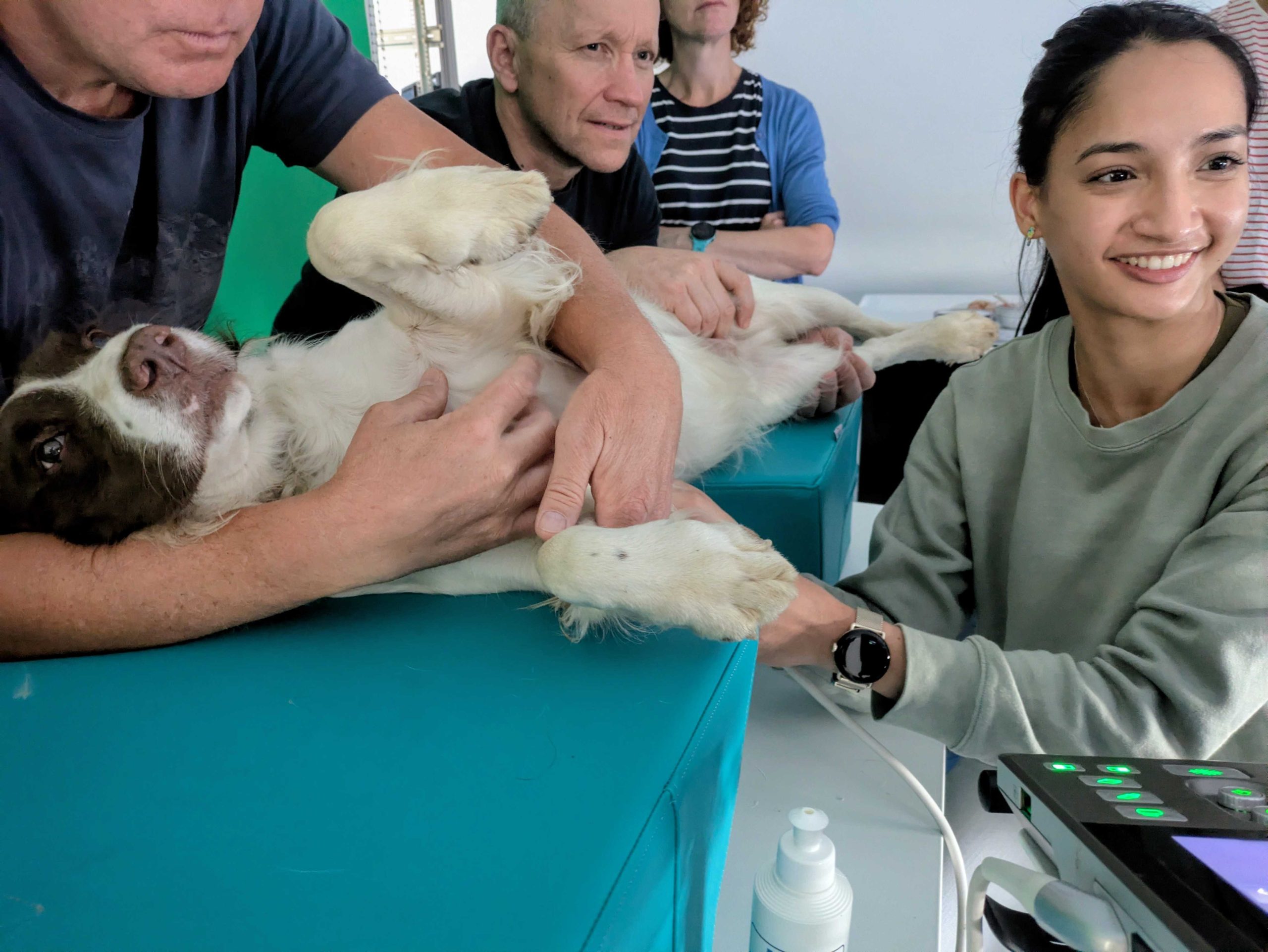
On the day, we were fortunate to have four dogs and two cats available for scanning: two Shelties, a Sheepadoodle and a Springer Spaniel, alongside a Maine Coon and a British Shorthair.
Two of the dogs had known cardiac conditions- a nine-year-old Springer Spaniel with dilated cardiomyopathy and a five-year-old Sheltie with a ventricular septal defect. The variety of patients was used to best advantage, providing the group with ample scanning time and the opportunity to run through all the main right- and left-sided views. It also gave trainees the chance to identify key differences between the “normal” and “atypical” heart examples using the Vinno D6 and Vinno D10 portable ultrasound machines, picked by Catherine for the day’s training in light of their exceptional echocardiography capabilities.
Trainees were provided with a printed handout illustrating all the main views for future reference, giving them a practical resource to take back into their own clinical environment.
The morning session was spent with Catherine demonstrating transducer techniques for finding and optimising views, with trainees then attempting these themselves under her guidance. In the afternoon, attendees were split into two groups of two, scanning independently and rotating scan subjects, with Catherine overseeing and advising.
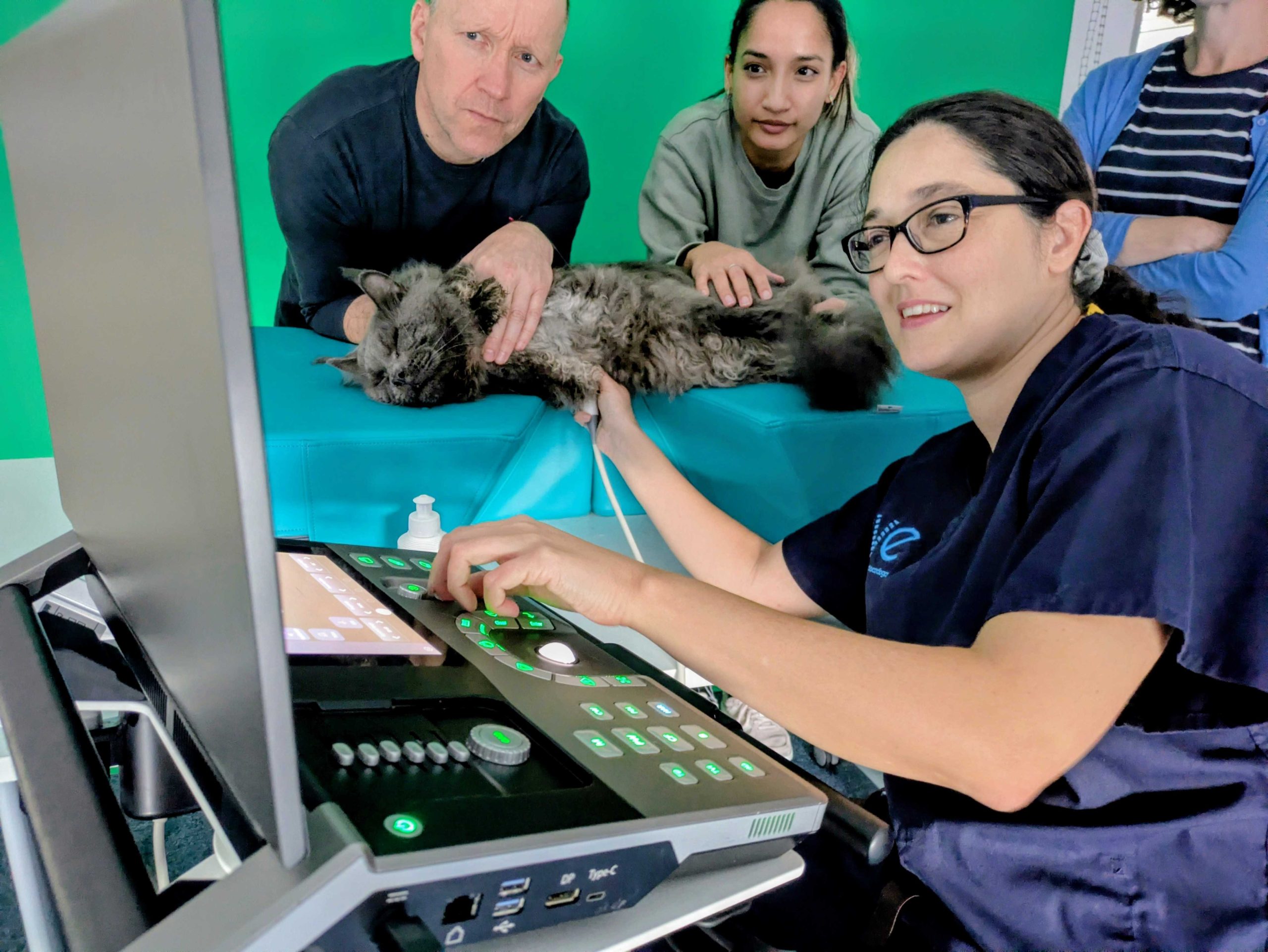
From the beginning, the group was encouraged to ask questions in an ad hoc fashion and the atmosphere was focused but informal, creating an environment where trainees could practise, make adjustments, ask questions and develop their technique without the pressure of having to perform immediately in a busy clinical setting.
The improvement in technique and confidence was visible throughout the day and it was generally agreed that the course was an invaluable opportunity for any veterinarian wanting to make echocardiography, and ultrasound generally, a part of their professional skillset.
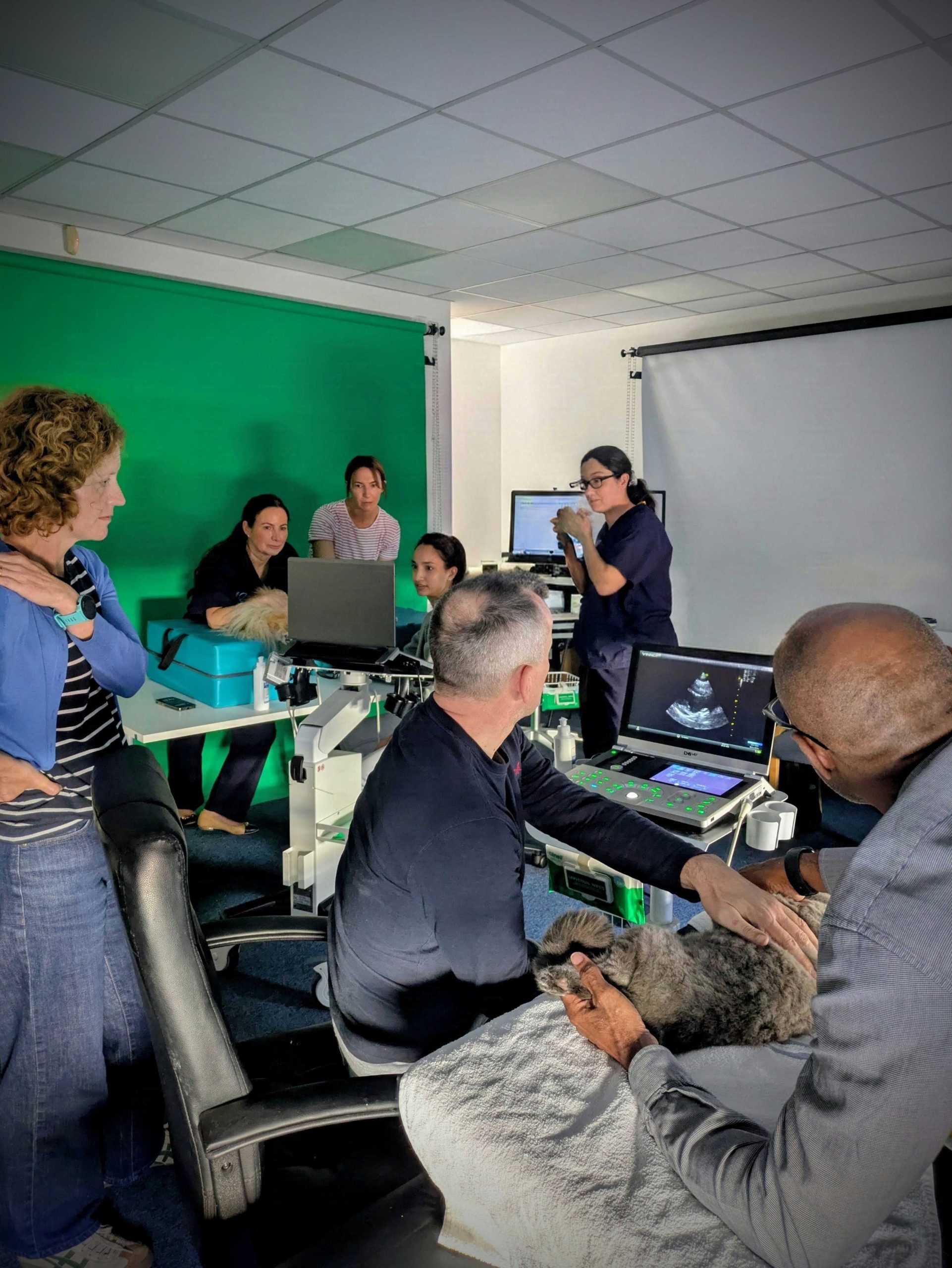
Part of the success of AUA in-person courses is our commitment to keeping group sizes small, allowing for maximum individual tutorage and practise time, a particularly important consideration for practical ultrasound training. Being able to get hands on with the transducer, receive immediate feedback and then have the opportunity to try again is a very different learning experience from simply observing a demonstration or working through theory.
Sadly, this does mean that our in-person events quickly sell out. However, if you missed the opportunity to attend this course, there are further opportunities to develop your echocardiography skills with the AUA:
Our next in-person echo course with Prof Virginia Luis Fuentes is scheduled for Wednesday 28th October 2026.
Further dates are also being added to the AUA events page for later this year and beyond including another day of echocardiography with Catherine on Tuesday 17th November. We hope to see you there.
