

Puppy resorption—also known as foetal reabsorption—is one of the lesser-discussed but critical aspects of canine reproduction. For breeders and pregnancy scanners alike, understanding this phenomenon is essential to offering high-quality care, accurate monitoring, and responsible breeding practices.
Foetal resorption occurs when a foetus dies in the womb and is subsequently absorbed by the mother’s body. It can happen at any stage of gestation, but it’s most commonly seen before day 45 of pregnancy. At this early stage, the foetus and associated structures are typically reabsorbed without any external signs, often going unnoticed unless pregnancy is being actively monitored through ultrasound.
A variety of causes can contribute to resorption:
We recently received a powerful illustration of foetal resorption through a series of ultrasound images shared by *Joanne Smith, an experienced pregnancy scanner. Joanne used her trusted ScanPad ultrasound machine—still going strong more than six years after it was recommended to her during her level one training. The ScanPad, available at PUM, remains one of the most reliable machines on the market, and Joanne’s continued use of it is testament to both its durability and performance.
In this case, Joanne was monitoring a dog carrying a singleton pregnancy—a single pup—which carries inherently increased risks. Unfortunately, the foetus was found to be non-viable. However, because Joanne had taken images earlier in the pregnancy, she now has rare and valuable “before, during and after” comparison images that clearly show the progression of the resorption process:
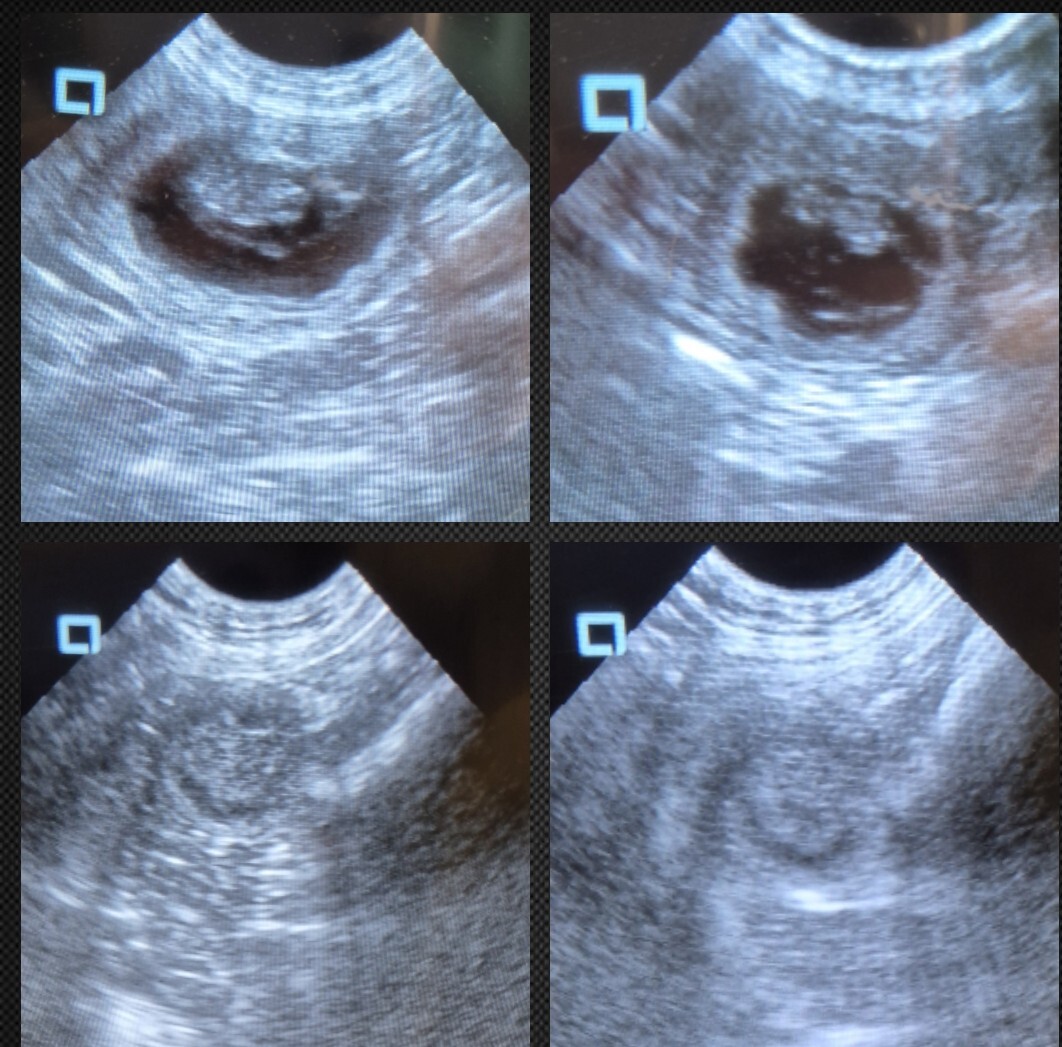
She continues to monitor the dog closely, and although the story is still unfolding, the quality of her scanning and documentation offers a vital learning opportunity for others.
While early pregnancy scans are essential, follow-up scans are equally important—especially when medical interventions have taken place. A key example of this is Alizin, a commonly used medication to induce abortion in dogs under specific circumstances.
After administering Alizin, it’s strongly recommended to carry out periodic scans to ensure the medication has been effective and that all foetal material has been fully resorbed. In some cases, incomplete resorption or complications can arise, so ongoing ultrasound monitoring is vital.
One major takeaway is that scanning shouldn’t be a one-time event. Whether scanning your own dogs or offering scanning services to others, providing follow-up or progress scans allows for better care and greater confidence in the outcome.
This approach also helps you get the most from your investment in both your training and equipment. Machines like the ScanPad are designed to last, and when paired with proper training, they empower users to detect changes early and act accordingly. For service providers, offering follow-up scans can also elevate your offerings and reputation.
Joanne’s level of expertise didn’t appear overnight. It developed through consistent practice, dedication, and the willingness to keep learning. With the right foundation, anyone with a passion for animal care can build a strong skill set—and even contribute meaningful case studies like this one to the wider community. Joanne’s case serves as a vivid reminder of how essential it is to stay informed, skilled, and well-equipped.
Foetal resorption is a quiet, often invisible process—but one that carries significant emotional and medical implications. Thanks to responsible scanning, careful observation, and the reliability of long-lasting machines like the ScanPad, breeders and professionals can offer truly comprehensive care.
As Joanne continues to monitor this case, her experience stands as a testament to the power of dedication, the value of experience, and the critical role of quality training and equipment.
If you’re scanning today, remember: your journey could lead you to similarly impactful moments. With practice, knowledge, and the right tools, you’re well on your way.
*To find out more about Joanne’s business and services, please visit her Facebook Page.
